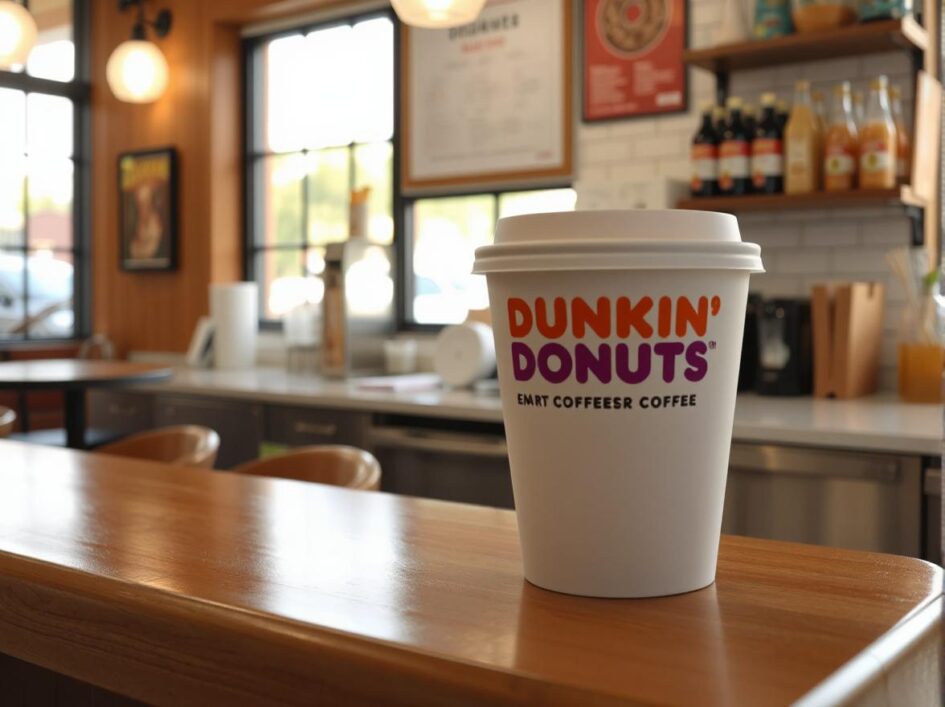
“Oh lord, I’ve had enough of these people out here,” I say after handing—yet another—tourist a coffee and sincerely bidding them a “good day” that I wish I was having. Dunkin’ Donuts is a treat to many of the Canadians that come through this small-town-in-the-middle-of- nowhere. How they find us in our off-the-beaten-path Tradewinds beats me. We’re forty-five minutes in the opposite direction from Bar Harbor: the major tourist magnet. Over the course of the summer, having worked just over thirty hours a week, I’ve served many Canadians, Latinos, and Asians, donning my I’m-so-happy-to-be-working-here face while truly wondering when tourist season will come to an end—and when I’ll be able to drive on the winding backroads without concern for my safety (because nobody knows how to use the intersection by my house, and I choose to refrain from using the horn on my sedan because it has a sound as pathetic as a mewling kitten).
I can’t complain too much. The influx of visitors to my state is improving its economy and increasing the number of bright, smiling faces that visit my Dunkin’-Donuts-in-the-middle-of- nowhere. However, these joyful faces just work to patronize me. I guess as a privileged seventeen-year-old I cannot be a source of valid opinion, but sometimes the viewpoint of a dogmatic teenager can be eye-opening.
My—quite pessimistic—perspective on tourism often leads to an animated discussion with my boss over the well-known conflict of the-ignored-yield-sign-off-of-I395: how it’s impossible to continue on 1A without almost rear-ending an “outta-stater” that had merged without having heeded the bright red triangle at the end of the off ramp. (I won’t specify where they’re often from, but they know who they are.) “They have the same signs in their own state,” is my boss’ frequent contribution to our recurring conversation on the topic—not that I like to ruminate, but complaining about this and that is an enjoyable pastime during an otherwise stressful workday. He repeats his go-to statement now during our discussion, misdirecting his anger at the donut that he is unsuccessfully trying to shove into one of our “universal” sleeves, and it ends up crumbling in his gloved hands. I bag a different one and hand it to the customer, getting a grateful “Thank you.”
When my parents bought our house over here in this underdeveloped part of Maine, they hadn’t known what irritations might arise come tourist season. Now we are all too privy to them. The plot of land we aspired to buy further north was snagged by a “New Yorkah” for their vacation home, and the beaches of Old Orchard were filled with people who spoke in different languages, accents, and dialects. But, on a more positive note, the value of our house had grown from $200,000 to half a million (which also meant more of our household income went towards taxes, but you gotta love the idea of having an asset worth that much cheddar in this day and age).
Maine is racking in the dough as tourism increases, yet I wish it could be populated entirely with “Maine-iacs”: the “lobstah” fishing, blueberry picking, “wicked” sunburnt descendants of Irish immigrants who wear plaid shirts with L.L.Bean boots and thrive in what the Florida natives might consider Arctic winter temperatures. In spite of that, I guess we can’t change that this destination is a “Vacationland”.
October 3, 2025 at 8:51 am
This is great, Grace! It’s very detailed and descriptive. I love the words in quotes.
October 3, 2025 at 12:46 pm
This is written so well! I love the way you worded things, and the way you described Maine-iacs.